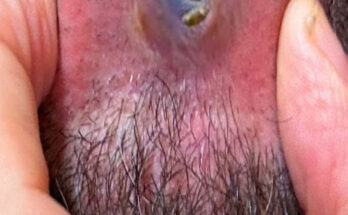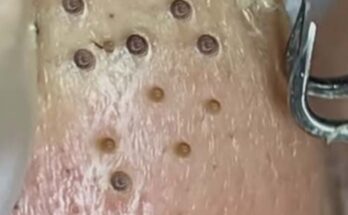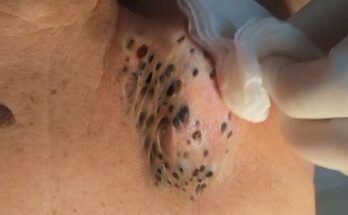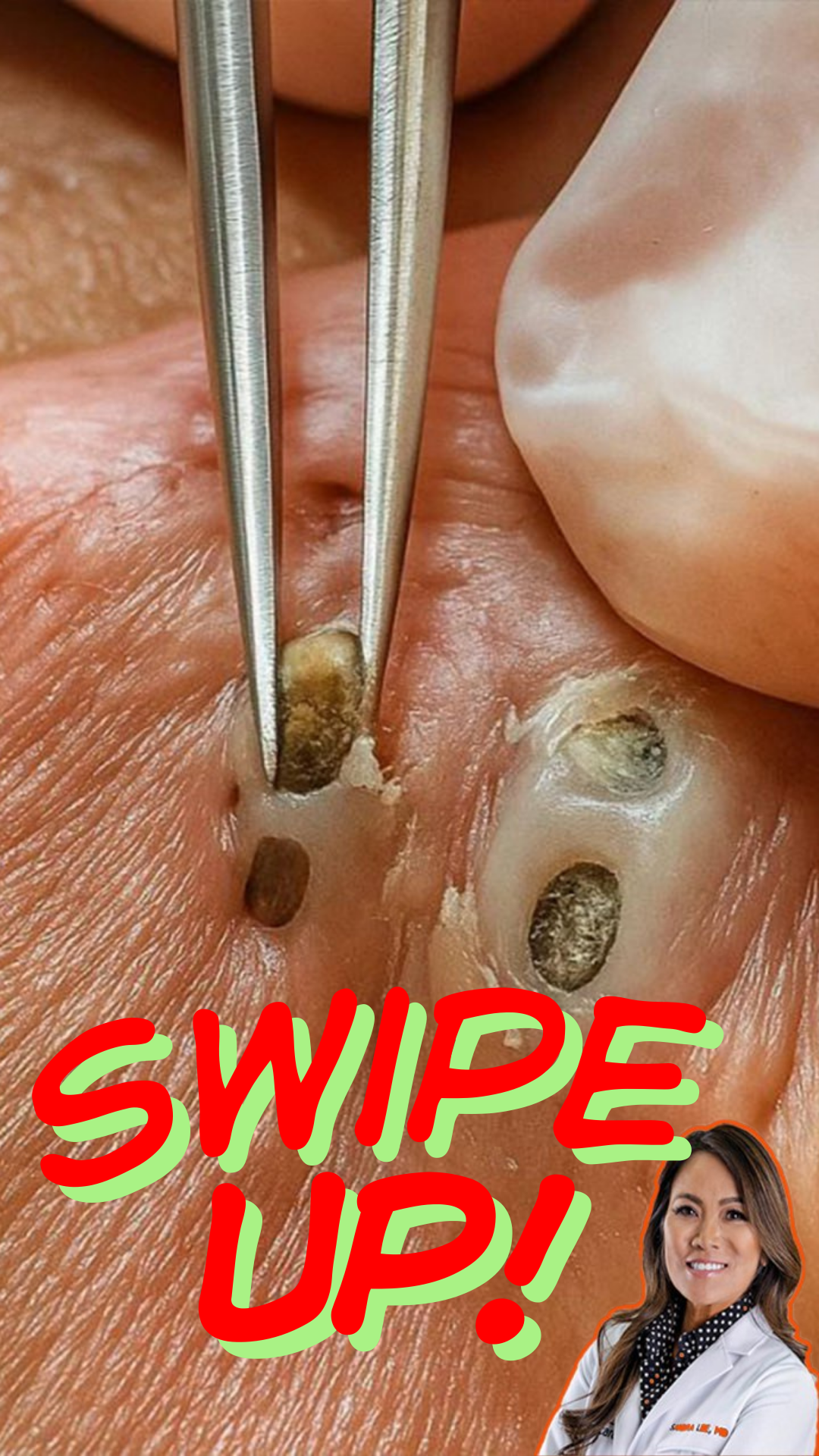
Foot skin problems can be painful, frustrating, and surprisingly difficult to treat, especially when they form on weight-bearing areas of the sole. The image shown appears to capture a close-up removal of hardened plugs from the bottom of the foot. At first glance, many people may think they are looking at blackheads on the foot, but that is usually not the case. In most situations, lesions like these are more likely to be plantar warts, seed corns, or other compacted keratin plugs embedded in thick foot skin.
This type of content gets attention because it is both dramatic and educational. The skin on the sole is naturally thicker than skin on most other parts of the body. When pressure, friction, or certain viral skin conditions affect the foot, the skin can build up into hard, painful spots. Over time, these spots may develop a central core or dark center, making them look deep, stubborn, and difficult to remove. That is why foot debridement and wart or corn removal videos are so fascinating to watch. People are curious about what these lesions are, why they form, and how they are taken out.
One of the most common explanations for these deep circular spots is a plantar wart. Plantar warts are caused by certain strains of the human papillomavirus, often called HPV. These warts usually develop on the soles of the feet, especially in areas that experience constant pressure, such as the heel or the ball of the foot. Because the body’s weight presses down on them, plantar warts often grow inward rather than outward. This can make them look like small craters or firm plugs beneath the skin instead of raised growths. They may also have tiny black or dark brown dots inside, which are often clotted blood vessels rather than dirt.
Another possible explanation is a corn, especially a deep corn or seed corn. Corns are thickened areas of skin that develop from repeated pressure or friction. They are the body’s attempt to protect itself. When a certain area of the foot experiences constant rubbing or impact, the skin responds by becoming harder and denser. A corn may form a compact central core that presses into deeper tissue, causing pain when walking or standing. In close-up images, corns can look like round, hard plugs that sit inside slightly raised or whitened skin.
Although plantar warts and corns can look similar, they are not the same. Plantar warts are caused by a viral infection, while corns are mechanical and form because of pressure and friction. Warts may interrupt the natural skin lines of the foot, while corns usually develop directly over pressure points and may keep the skin lines more intact. Warts can also be tender when squeezed from the sides, while corns often hurt more when pressed directly downward. In real life, however, it can be difficult for someone to tell the difference without professional evaluation.
The image appears to show a practitioner using a fine tool to lift out hardened core-like material from several round lesions in the sole. This process is commonly described as debridement, core removal, or paring down the lesion. In the case of corns, removing the hardened center may reduce pressure and pain. In the case of warts, debridement is often part of treatment to remove dead skin and expose the lesion so topical medication or other treatment can work more effectively.
These lesions can become very painful because of where they occur. The sole of the foot absorbs body weight with every step. Even a small lesion can feel much worse when it is placed in a high-pressure area. Some people describe it as feeling like they are walking on a pebble or needle. Over time, the pain may change the way a person walks, which can then lead to discomfort in other parts of the foot, leg, or back.
There are several reasons why people develop these kinds of foot lesions. For plantar warts, risk factors include walking barefoot in public places such as pool areas, locker rooms, and communal showers where the virus may be present. Small breaks in the skin can make it easier for the virus to enter. For corns, causes usually include tight shoes, poor foot support, repeated pressure, unusual gait patterns, or foot structure issues that place extra force on certain areas. Standing for long periods can also worsen the condition.
One reason these spots are often ignored for too long is that people assume they are minor. A small hard area on the foot may not seem serious at first, but it can slowly thicken and become more painful over time. Some people try to cut or dig them out at home, which can cause bleeding, infection, and more irritation. This is especially risky for people with diabetes, poor circulation, or reduced sensation in the feet. For those individuals, even a small injury on the sole can become a serious medical issue.
That is why professional treatment is often the safer choice. A podiatrist, dermatologist, or trained foot-care professional can examine the lesion and determine whether it is a wart, corn, callus, or another skin problem. Treatment may include careful trimming of thickened skin, topical medication, freezing therapy, padding to reduce pressure, or advice about better footwear. If the lesion keeps returning, the provider may also look for the underlying reason, such as biomechanical pressure or persistent viral infection.
At-home treatment depends on the cause. For corns, relieving pressure is one of the most important steps. Wearing properly fitted shoes with enough space and cushioning can make a major difference. Protective pads or insoles may also help. For plantar warts, over-the-counter treatments containing salicylic acid are sometimes used to gradually break down the thick skin. However, these treatments should be used carefully and not on broken skin. People with circulation problems, diabetes, or uncertain diagnoses should avoid self-treatment without medical guidance.
Good foot hygiene also plays an important role. Keeping the feet clean and dry, changing socks regularly, and avoiding walking barefoot in public wet areas may help reduce the risk of plantar warts. Using supportive footwear and minimizing repetitive friction can help prevent corns. Regular foot checks are especially important for people who are prone to skin thickening or have underlying health conditions.
From a website content perspective, this type of image works well for articles about foot care, plantar wart treatment, corn removal, podiatry procedures, and viral satisfying medical content. Readers are naturally curious because the lesions look unusual and because the removal process appears both delicate and dramatic. But beyond the visual interest, these topics are genuinely useful. Many people experience painful foot lesions without knowing exactly what they are or how they should be treated.
A responsible way to describe the image is to say that it appears to show removal of plantar wart tissue or deep corn cores from the sole of the foot. That wording is clear and informative without pretending to make a certain diagnosis from the image alone. This matters because several different foot conditions can look alike, especially in close-up views.
About The Author